
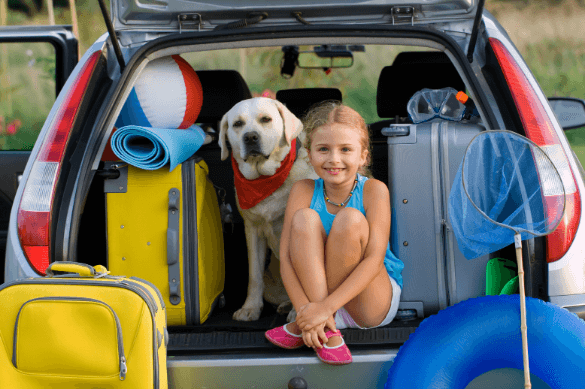
Whether you take your pets with you on holiday or leave them behind, a little advanced planning goes a long way - here is a quick checklist
Comfort and safety
It is tempting to give your pet plenty of room on long car trips, but giving them a confined space that’s their own is much better. If they’re crate-trained, that’s their area of security. It is safer as well. An animal is much better off in a durable crate than it is sliding around in the backseat of a car.
Make sure your pet is identified
An unfamiliar location miles away from home is the worst place to lose your pet. Before your trip, make sure they’re easy to find in case the worst happens. Implanting a microchip will make your pet trackable no matter where in the country they wander off to. Now is a good time to check that your details are logged correctly for a microchip – your veterinary clinic can check this for you. At the very least make sure the contact information on your pets’ tags is current and up to date. That way they’re more likely to be returned safely if someone finds them.
Check that all vaccines are up to date
Now is a good time to make sure you did not miss any vaccines through the year. If your pet stays at home, you do not want them to get sick while you are not there. If they travel with you, they may be exposed to other animals and infection risks and if they go to the kennel a good kennel will expect confirmation that all vaccines are up to date. Chat to your veterinarian to see if any additional vaccines are suggested for the manner in which your pet will spend the holidays.
Remember chronic medication
Medications to calm your pet
Parasites are everywhere
Make sure you take tick, flea and worming medication with or leave the right meds for the pet sitter with instructions on when it should be administered. It is a good idea to check with your vet if the area you travel to have different parasites to worry about than your home turf as this is often the case.
If you are kenneling your pet, make sure you have all the details about your tick, flea and worming routine as some kennels also require proof of deworming and flea/tick meds along with vaccines.
Food, bowls, beds and toys
Just like us, animals find a lot of comfort in things they are familiar with.
In the case of food, your pet may be on a special diet or may develop digestive discomfort if they suddenly have to eat different food. Take enough food with you or make sure there is enough going with them to the kennel or staying with the pet sitter. Your pet sitter may not have the opportunity to replace food that is finished.
Your pet will thank you if you make the effort to have her bed and favourite toy available to her.
If you travel with your pet, remember to pack a bowl for the road. When you stop you need something to put food and water in. Consider a collapsible bowl to save space.